Buying a house in Rotterdam city centre: areas, costs and daily life
A practical guide to buying a house in Rotterdam city centre, with checks for buildings, costs, schools, transport and planned changes.
1. Introduction
Buying a house in Rotterdam city centre can shorten a commute and put shops, food, culture and the river close to home. It can also mean a smaller floor plan, a busy street, shared building costs and a parking decision that needs its own budget line. The label “city centre” covers several living environments, so the address and building deserve as much attention as the asking price.
TL;DR
- Compare the exact street and building with the district name in mind.
- Put VvE charges, maintenance, parking and purchase costs beside the mortgage calculation.
- Test the daily journey at the time you will actually travel.
- Ask how current building work and planned public-space changes may affect noise, access and views.
- Keep a simple scorecard so a good view or short commute does not hide a weak building decision.
Your first comparison can combine neighbourhood and buying questions with the financial checks, rather than relying on a listing’s headline. From there, the useful question is whether this centre address fits your life for the years you expect to live there.
2. Neighborhood Overview
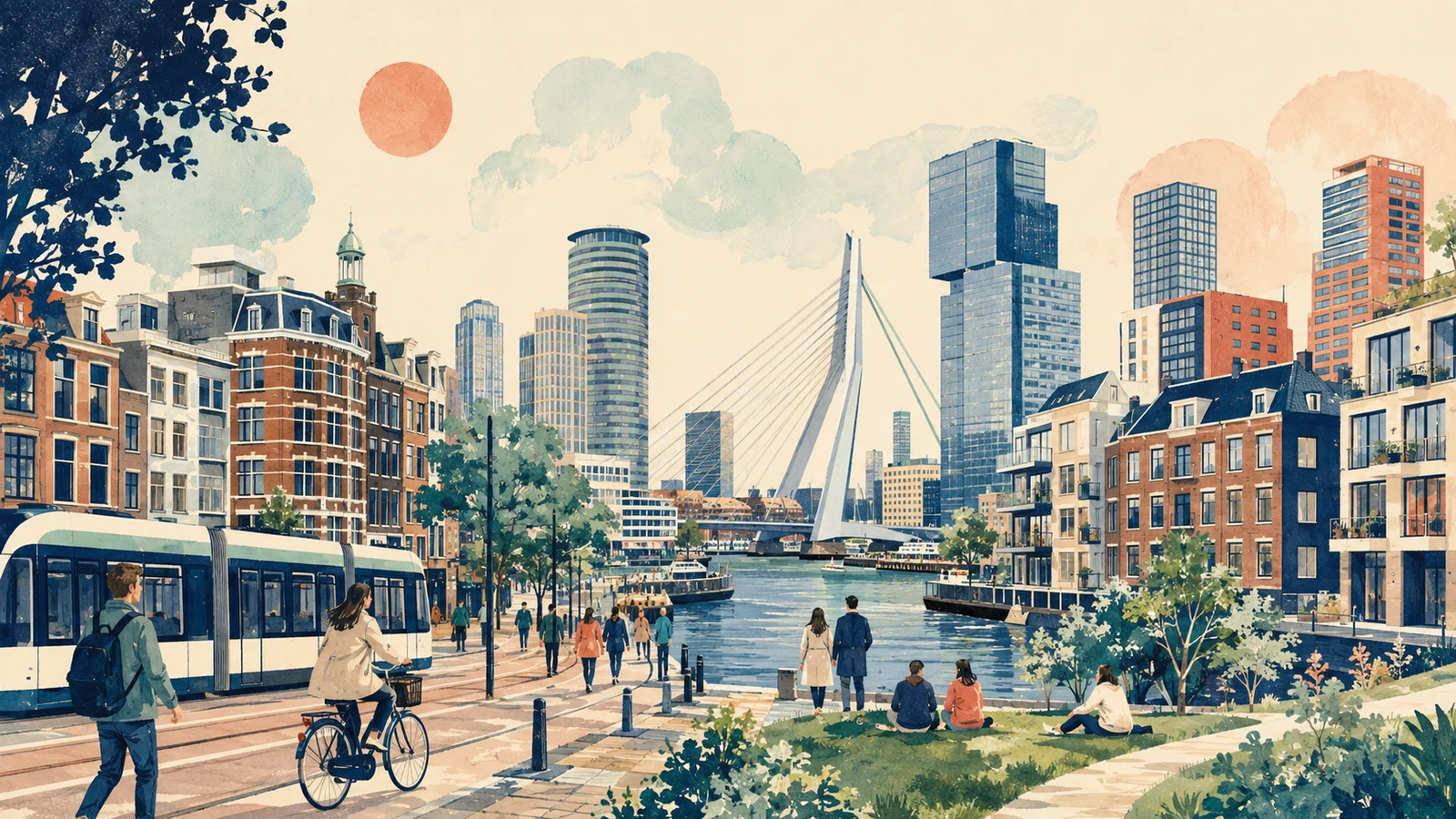
Rotterdam city centre is a group of different settings. Around Rotterdam Centraal, the Rotterdam Central District has rail, RandstadRail, offices, food and shops in a dense urban mix. Cool and the Oude Westen bring busy streets, older blocks and short walks to daily services. Stadsdriehoek and Scheepvaartkwartier give access to the river, museums, historic streets and newer apartment buildings. Maritiem District sits between Blaak, Leuvehaven, the Maas and Oostmolenwerf, where historic harbour water meets newer towers and changing public space.
Near Rotterdam Centraal, Rotterdam Central District brings rail, RandstadRail, shops, food and offices into one mixed centre.
Around Rotterdam’s centre, Maritiem District brings historic harbour water, newer towers and changing public space together, so two nearby addresses can feel very different. A home near a quay may have an open view and more visitor activity. A home one or two streets back may feel calmer while still sitting close to the same services.
Start with the building
City-centre housing includes apartments in a tower, a converted office or an older block. Ask how the entrance is secured, how deliveries are handled, whether the lift reaches the right floor, where bicycles can stand and how outdoor space is shared. A balcony facing a busy tram corridor gives a different daily experience from one facing an inner courtyard.
Go through the VvE documents before treating a low service charge as good news. The budget, reserve position, planned maintenance and recent meeting decisions can tell you more than the charge alone. Look for the age of the roof, façade, windows, lift, heating system and shared installations. Ask which work is already approved and which work is still an idea.
Before you budget for a loft, roof change or renovation inside the home, ask which Rotterdam building and renovation rules apply to the address and proposed work. Read the building’s rules, the VvE decision process and the municipal plan together. A private wish may need agreement from the VvE or a permit, and a permitted change can still affect neighbours or shared installations.
Compare streets at more than one time
Visit on a weekday morning, after work and on a weekend. Listen with the windows open and closed. Notice deliveries, nightlife, traffic, construction noise, cyclists and the distance between the front door and the nearest quiet place. A short walk to a shop can be a real benefit, while a permanent loading bay under the bedroom can affect sleep.
For a viewing near Weena, Cool or the station, factor Hofplein works and travel changes into the commute because temporary diversions can alter a journey that looks simple on a map.
If you are still sorting your budget and timing, buyer basics for your situation helps set the borrowing, timing and household questions before you compare city-centre streets. That order keeps a striking address from deciding the budget for you.

3. Cost of Living Analysis
City-centre costs are easier to judge when you split them into three columns: money needed to complete the purchase, recurring ownership costs and work or changes you may choose after moving in. The listing price belongs in all three conversations because it affects the mortgage, the tax calculation and the cash left for repairs and furnishing.
The asking price sits beside costs around buying a house, from the transfer and notary work to inspection, advice, moving and early repairs. If you compare only the mortgage payment, you can miss the cash needed between signing and getting the keys.
Recurring ownership costs
For an apartment, ask for the current VvE contribution and what it covers. Separate insurance, cleaning, lift service, shared heating, reserve saving and planned work when reading the budget. A recently renovated lobby does not tell you whether the reserve is ready for the next roof or façade project. A low contribution can leave owners with a later call for extra money.
Energy use deserves its own question. Ask which parts of the bill belong to the apartment and which belong to shared systems. Compare the energy label with the age of the windows, the heating setup, ventilation and the rooms you will heat. A top-floor apartment, a corner home and a sheltered middle-floor home can behave differently even in the same complex.
Parking and mobility costs
Parking deserves its own calculation. If you own a car, factor resident parking permit rules into the housing budget: eligibility can depend on the area, and a permit does not reserve a space outside the home. The municipality says some areas have a waiting list, and new-build homes do not receive resident permits. A private garage, a rented space or a nearby public garage may change the monthly calculation.
Write down three totals before an offer:
- Cash required for the purchase, including the costs that do not fit into the loan.
- A normal monthly total including the mortgage, VvE, energy, insurance, local charges and transport.
- A repair and furnishing reserve for the first year, with room for a surprise in an older building.
If you are buying in Rotterdam, compare the costs of buying a house in the Netherlands with the city-specific budget, then separate one-off purchase costs from ongoing ownership costs. The result is a clearer offer decision, even when you do not know yet which property will win.
4. Schools and Education
Families start with the school question, then discover that a centre address may sit near several schools without guaranteeing a place or making the choice simple. Rotterdam says children can start school at 4 and become subject to compulsory education at 5. Parents choose a school, and the school itself handles enrolment.
If you are moving with children, compare schools near the address before scheduling a visit or asking about enrolment. Compare the walking or cycling journey, opening hours, after-school arrangements, language support and the school’s own approach. A school that looks close on a map can be harder to reach when a busy crossing, tram line or construction site sits between home and the entrance.
Ask the school about enrolment timing before you make a final decision. The municipality says a child can be registered from the third birthday, and a school may have a waiting list or lottery. If you are arriving from another country, ask which records and language information the school needs, and which school pathway fits your child’s age and previous education.
Older children may travel outside the centre for their chosen school. Add that journey to the same morning test as the work commute. If one parent travels from Rotterdam Centraal and a child travels across the city, the address should work for both journeys instead of serving only the nearest school.
Schools also affect a street’s rhythm. A school entrance can bring a busy morning and afternoon period, while a building near a larger school campus may have more movement throughout the day. These are lived details to observe at the viewing, not reasons to rate a school from a distance.
5. Lifestyle and Amenities
City-centre living is strongest when you will use the city on ordinary days. Walk from the front door to a supermarket, pharmacy, bakery, green space and a place where you can sit without spending money. Then repeat the walk with a bicycle, shopping bags or a child. This simple test shows whether convenience exists at the pace of your life, rather than merely on a map.
Food, culture and errands
The centre offers a close mix of food, shops, museums, libraries, cinemas and public events. Rotterdam Central District brings offices, rail travel, restaurants and other daily activity around the station. The river and the inner harbours create attractive walking paths, while streets around the main shopping and entertainment areas can be loud and busy.
Ask what you want close by and what you want further away. If you work long hours, a late shop and a short train connection may matter most. If you have children, a quiet bedroom, a nearby playground and space for bikes may matter more. If you work from home, daylight and a clear separation between the living room and the street may matter more than a café at street level.
Water, green space and public life
The city centre has squares, quays, planted streets and smaller green spaces, yet the amount of private outdoor space varies sharply between homes. Check whether the balcony faces the street, a courtyard or another building. Ask how the entrance, bins, bicycle storage and shared garden are managed.
The Maritiem District is adding greener quays and better connections to the water. Those changes can make a walk more pleasant, and the work can also affect access and parking while it is underway. Treat a public-space promise as something to verify in the municipal project information and at the address.
Noise and privacy
Listen for trams, traffic, deliveries, bars, visitors and mechanical systems. Upper floors can change the sound profile without removing it. Check bedroom windows, ventilation, shutters and the location of shared equipment. A courtyard can be quiet at midday and busy when residents return home.
Look at the way from the street to the front door after dark. Lighting, sightlines, concierge arrangements, access control and the condition of the entrance all affect how the home feels when you come back late. Ask the selling agent which parts of the building belong to the VvE and which belong to the individual owner.
6. Transportation and Commute
Transport connections shape the city-centre choice. A short walk to Rotterdam Centraal can matter when work, family or regular travel depends on the station. Test the connection at your usual travel time rather than relying on the address alone.
Still, judge the door-to-door trip. Time the walk to the station, the wait, the platform change and the final leg. Cycle the trip on a wet day if cycling is part of the plan. If you travel by car, test the last few streets, the garage entrance and the time needed to find or pay for a space.
The municipality says Hofplein work continues to the end of 2027, and tram services across Hofplein are changed from 18 July to 22 November 2026. Treat live travel information as part of the viewing process.
The centre’s traffic circulation is also changing over time. A plan for the centre and nearby areas aims to reduce through-traffic and create more room for walking, cycling and green space while keeping homes and services reachable. That can improve a street’s daily feel, yet it may alter access or parking patterns. Ask which street-level changes affect the address and when.
7. Future Development
Future work matters because it can change the view, the sound level, the number of neighbours and the way you reach the home. In Maritiem District, the municipality lists 56 homes at Riva with building planned from 2027, 347 student homes at De Hoge Wiek after demolition from 2026 and up to 500 homes at the former Havenziekenhuis site with no timing stated. These are plans with different levels of certainty.
Hofplein is being changed into a greener city square, with more space for walking and cycling and 150 planned trees. The municipal schedule runs to the end of 2027. Ask what the construction phase means for your building, and keep an eye on the final layout rather than relying on a sales image.
Match a private alteration to the building’s rules, the VvE decision process and the municipal plan before you add the work to your budget. A change may need VvE agreement or a permit, and it can still affect neighbours or shared installations.
8. Pros and Cons Summary
What can work well
- Short walks to shops, food, culture and services.
- Strong rail and public-transport connections around Rotterdam Centraal.
- A wide choice of apartments, from older city blocks to newer towers.
- Water, public squares and changing green spaces close to daily life.
- Less need for a car when work and errands sit nearby.
What needs a clear answer
- Smaller homes and less private outdoor space than in many outer areas.
- Service charges, shared repairs and VvE decisions can shape the real monthly cost.
- Street activity, deliveries and nightlife can affect sleep and privacy.
- A parking permit may have a waiting list and does not reserve a place at the home.
- Works around the station, Hofplein and water-side areas can last for years and alter journeys.
The right choice depends on which trade-off you can live with every week. A short commute may matter more than a spare room. A quiet bedroom may matter more than a restaurant downstairs. Put those preferences in writing before you compare offers.
9. Conclusion and Next Steps
At each viewing, score five things from 1 to 5: building condition, total monthly cost, daily journey, street life and future works. Write one sentence explaining each score. Ask for the VvE documents, parking conditions, energy information and any known public-space plans before you treat a high score as an offer decision.
Buying a house in Rotterdam city centre can make daily life compact and connected. It asks you to price shared ownership, activity and change with the same care as the mortgage. If a city-centre address raises a question about the building, VvE, parking, schools or planned works, the practical note here gives you a way to ask it without sending personal documents.
Buying in Rotterdam city centre means weighing building condition, service charges, daily noise, parking and planned works alongside the asking price. If you have a question about a city-centre home, its VvE documents, parking or planned works, send it through our contact page. Please do not send passports, contracts, bank details or other personal documents through the public form.
Ask a question about buying in Rotterdam city centre →Please do not send passports, contracts, bank details or other personal documents through the public form.